



Real-world testing is a critical part of any new combat aircraft development, but even before a prototype aircraft takes to the skies, there are effective ways to test critical systems in the air, including the sensor and communications suites, and accelerate its introduction into service.
For the UK’s Future Combat Air System (FCAS), the answer is the Excalibur flight test aircraft (FTA).
The Excalibur FTA is being developed by Leonardo and 2Excel as part of Team Tempest – the UK Industry and MOD partnership formed to generate the technologies and sovereign skills required for the UK to lead in the development of a next generation combat air system.
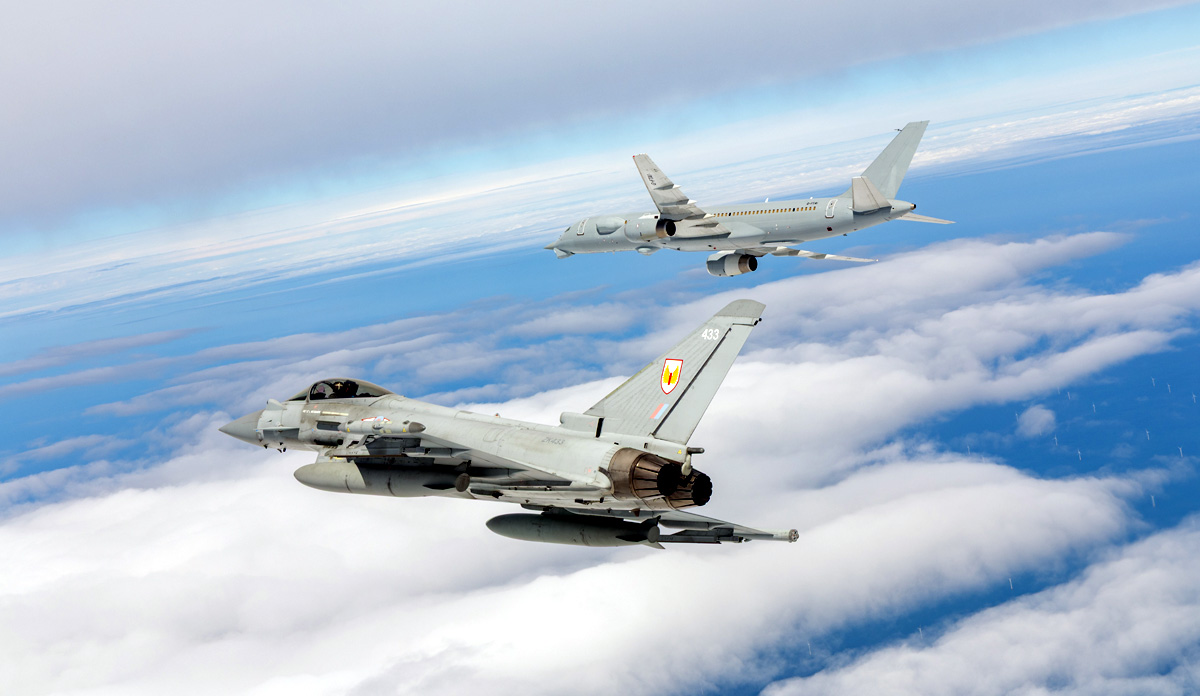
Excalibur’s real-world validation is crucial in ensuring the success of the UK FCAS programme, at the heart of which is the new sixth generation fighter being developed by the UK and partners Italy and Japan as part of the trilateral Global Combat Air Programme (GCAP).
Airborne testing will be a fundamental enabler for the programme with the ability to fly in representative environments and perform real-world tests that cannot be replicated on the ground via simulation and modelling alone. Although these latter techniques are powerful, they cannot fully account for diverse environmental conditions or system interactions at scale. They just do not give the fidelity achievable by airborne test assets like the Excalibur FTA.
The Excalibur FTA concept
As a founding partner of Team Tempest, Leonardo is utilising the Excalibur FTA airborne testbed – based on a Boeing 757 – to boldly bridge the gap between concept development and a deployable capability.
The platform – a sovereign capability developed in collaboration with 2Excel Aviation (2Excel) – was chosen for its size, performance and adaptability. Leonardo has a well-established relationship with 2Excel, emblematic of the positive collaborations it enjoys with multiple small-to-medium enterprises (SMEs) around the country. This highly tailored 757 testbed also highlights the sovereign skill set that exists in the UK.
The Excalibur FTA has already received all its internal and external modifications so it can serve as an airborne laboratory. For example, side pods have been fitted and the nose has been extensively modified.
The aircraft is undergoing clearances to approve its modified structure. Development will then shift to onboard system testing, before the 757 transitions into hosting technical data packages to support GCAP development.
Technology verification
So what technologies is Excalibur verifying? Sensors such as electronic warfare, communications and electro-optic/infrared. Much of these technologies are being developed as part of GCAP’s Integrated Sensing and Non-Kinetic Effects (ISANKE) and Integrated Communications Systems (ICS), a fully integrated sensing, fusion and self-protection capability.
There is also massive computing power aboard Excalibur, which permits technicians to stress-test the sensors and to fine-tune software. This testbed will evaluate technical data packages for the UK FCAS first, before the aircraft resets to take on an international reference set for the trilateral GCAP platform.
These technology packages are being inserted under a phased approach, with more complex systems such as the radar incorporated as the programmes progresses. As well as flying in UK airspace, the Excalibur FTA has the capacity to accommodate larger teams so they can travel to another country for testing.
Every aircraft development programme faces time pressures, so the Excalibur FTA shares the workload here. Compared to a GCAP-sized airframe, the 757’s larger space and greater capacity to manage and monitor systems in the air helps de-risk the whole programme.
A step change in integration
It has been common to use smaller aircraft as testbeds for fighter programmes, but a large airframe like the 757 permits the entire sensor system to be tested and incrementally improved. In fact, the real advancement and innovation here is integration, ensuring that systems share data within the integration layer.
This allows designers to grapple with issues such as size, weight and power constraints – known as SWaP – as well as practicalities like interfaces and connectivity.
Testing all these elements in the air as a whole is very important, since the UK FCAS capability is greater than the sum of its parts. Vastly different to conducting tests on the ground in tightly controlled environments, the Excalibur FTA permits live sensor networking, data link testing and multi-system interaction for real-world insights.
Furthermore, investing in this testbed is a significant opportunity to deepen understanding of the sixth-generation battlespace, and it gives the UK a world-leading capability available for future use. It also puts the UK in the vanguard of sixth-generation sensing and communicating, making the Excalibur FTA a critical strategic platform.
Enabling future concepts
Another advantage of having an FTA is that spiral developments can be incorporated as the programme progresses. Additionally, future operational concepts include autonomy and uncrewed teaming, as exemplified by collaborative combat aircraft (CCA). The UK and its GCAP partners recognise that the core aircraft will fly with supplementary CCAs, and these uncrewed aircraft require a high degree of interoperability via robust data links.
The Boeing 757 testbed with its representative sensor and communication systems is the perfect platform to prove that the GCAP platform can control CCAs and fuse their sensing data in realistic conditions. Excalibur will therefore allow engineering teams to perform these experiments at scale as part of the future air combat ecosystem.
Leonardo’s Excalibur will meaningfully test networked systems, autonomous concepts and supply live data to validate performance. Such testing aligns with global best practices, much of it pioneered by the UK. In fact, current platforms like the Eurofighter Typhoon benefited greatly from development work done by British companies on airliner-sized flying laboratories in the past.
The Excalibur FTA will accelerate innovation and capability development, unlocking the potential of GCAP to deliver the world’s most advanced air combat platform.