



Lisa Haskell, Earth Observation Consultant at Telespazio UK (part of Leonardo Space), began her career at Leonardo in Yeovil, where she learned engineering disciplines that she applies every day in her current role working on a variety of European Space Agency (ESA) contracts. In one of Lisa’s projects, Telespazio UK, in collaboration with Leonardo, is leading the ESA-funded Earth Observation (EO) Veracity project to ensure the integrity, authenticity and trust in satellite data. Lisa's role highlights how expertise developed in Somerset can successfully transition into the space sector through the transfer of industry-acquired skills.
“I have always been interested in space, but my dream to work in the space industry was cemented when, as a child, my father showed me Jupiter through a telescope,” recalled Lisa. It captivated me. I used to think space careers were limited to astronauts or NASA, but that just isn’t true. There are many ways into the space industry; not all career paths are linear, and you can definitely transfer your skills to the space sector. Today, I get so much satisfaction from my work, knowing that I am contributing to the advancement of climate and weather science, and our understanding of the environment.”
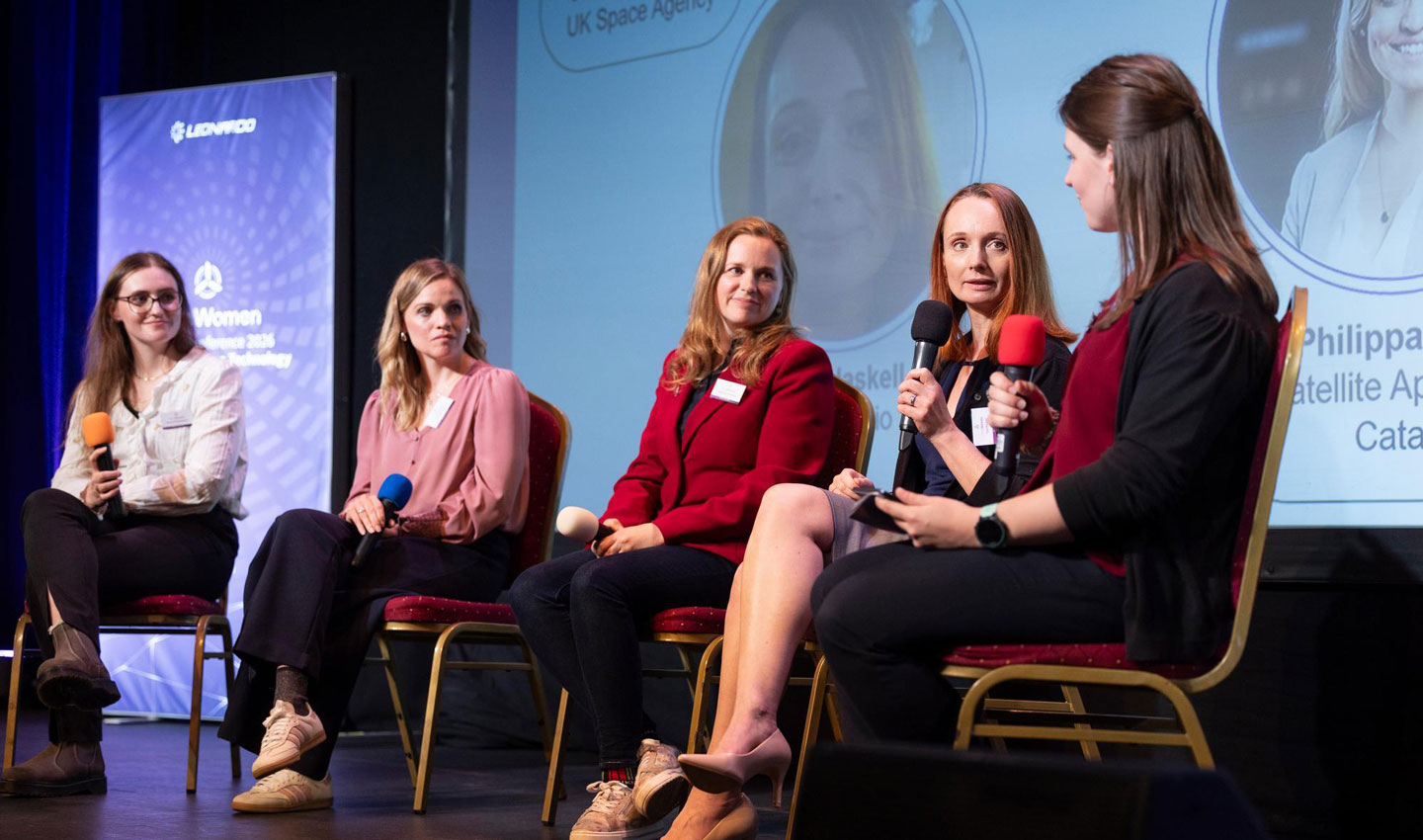
Lisa was part of the space-themed panel at AeroWomen 26 hosted by Charlotte Fox, a Graduate Systems Engineer at Leonardo. She joined the company after attending the University of Southampton, where she studied Aeronautics and Astronautics with Spacecraft Engineering, which included working on the development of a sustainable satellite network. Her eye on environmental stewardship continues in her current role, where she is developing sustainable systems for the future of flight.
“Preparing for this panel highlighted the breadth of opportunities and many routes into the space industry,” said Charlotte. The fantastic women on the panel are inspiring role models who show the value of hard work and self-belief. My hope is that more women at every career stage will be encouraged to explore their place in the future of space.”
The panel also featured Dr Meganne Christian, a Reserve Astronaut for ESA, who shared how she tested the absolute limits of human and professional endurance at the ‘White Mars’ research station at Concordia Antarctica. Her experiences in the frozen isolation of the South Pole served as a vital living lab where she encountered the challenges of deep space missions.
During the panel, Meganne discussed the potential for manufacturing pharmaceuticals and 3D-printed organs in microgravity, as well as the development of commercial space stations and space factories that could benefit health services and technology on Earth.
“Taking a leap into space isn’t so different to leaping into the unknown of your own potential. Both require courage and the belief that there are no limits to what can be achieved. In the space sector you are constantly learning something new, and sometimes that’s about yourself!” said Meganne.
