



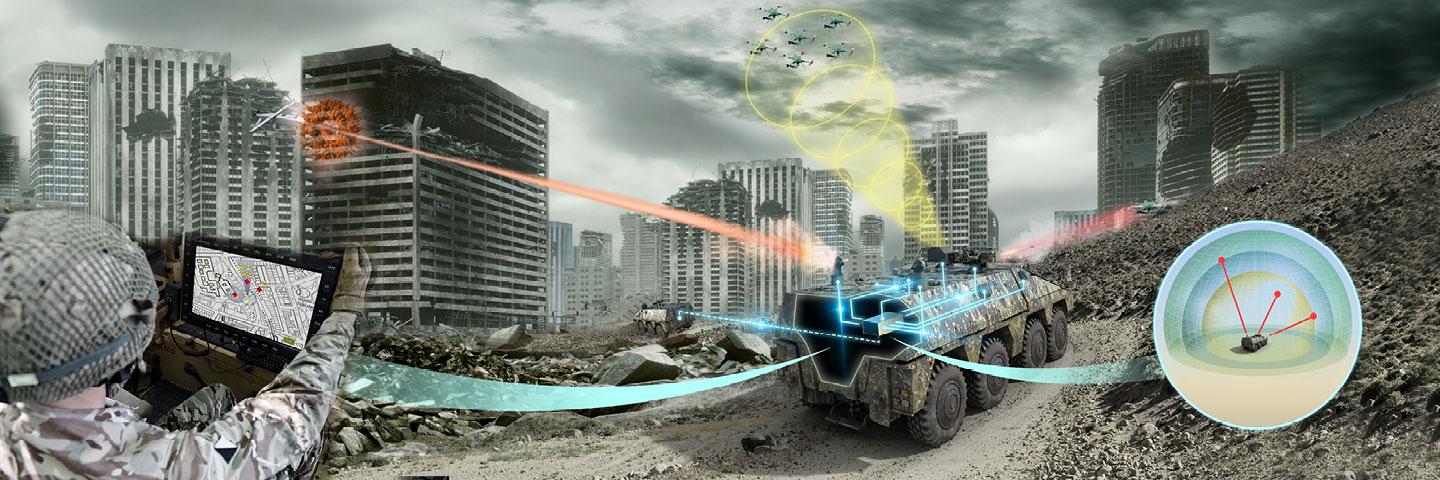
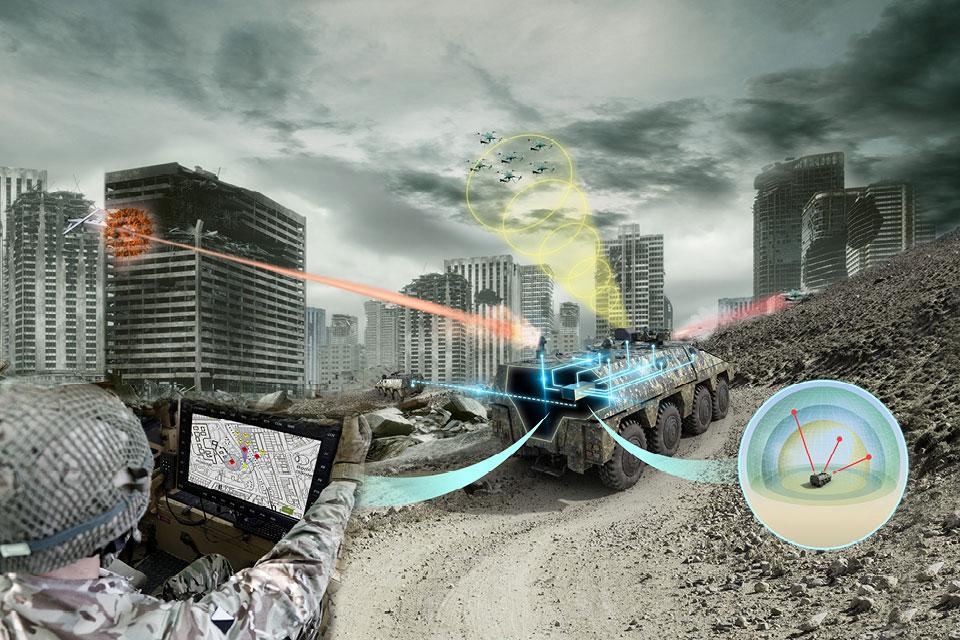
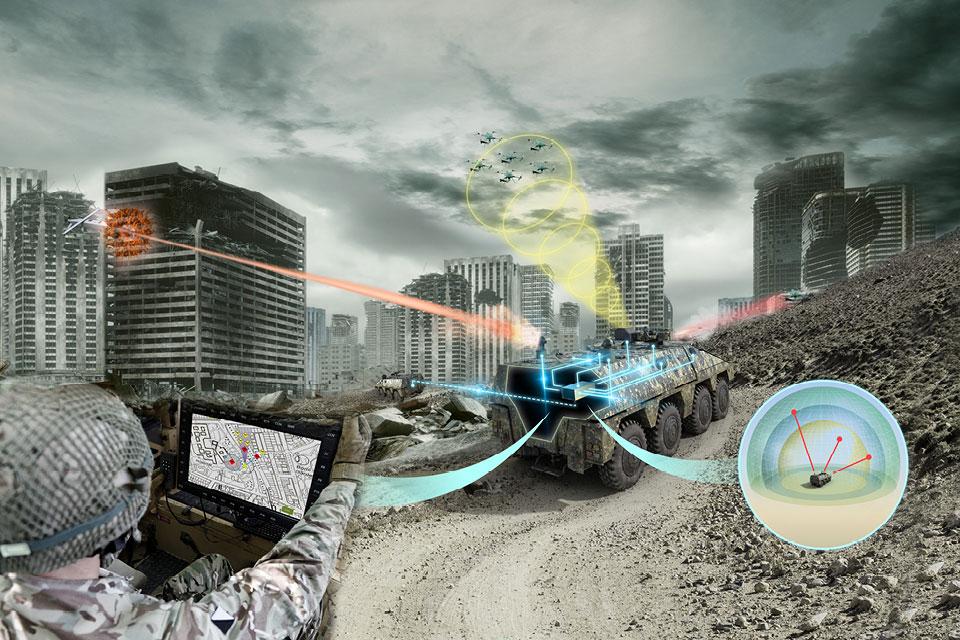
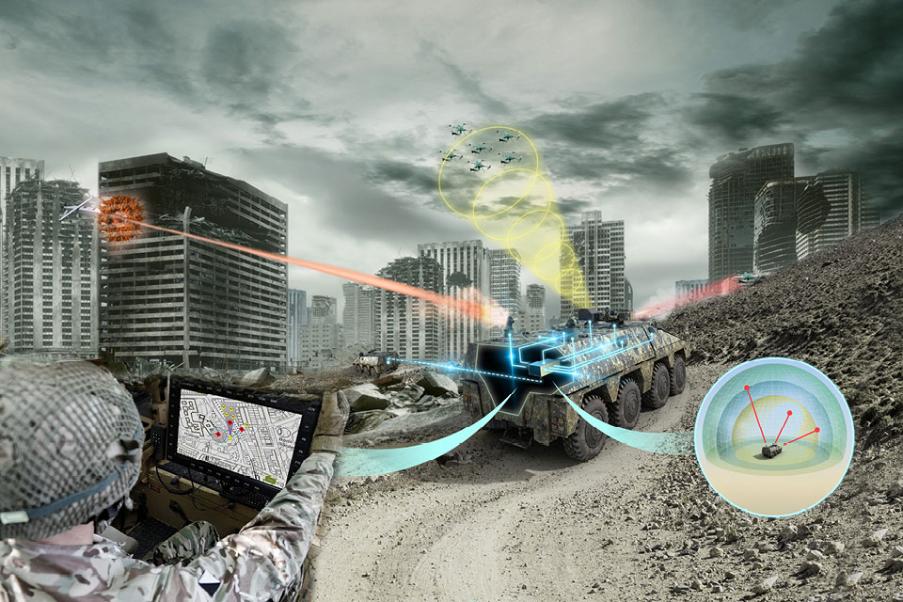
As modern conflicts have shown, modern threats – especially uncrewed systems – are making manoeuvring more challenging. In Ukraine, opposing forces have created a 30km-wide “attrition zone”, a hyper-lethal area straddling the line of contact using a “wall of drones”. Troops cannot manoeuvre to defeat the enemy, and this has created attritional warfare.
Survivability has thus become a dynamic problem, and it is vital if troops are to regain the initiative. But defending a mobile force against every type of threat 24/7 is unrealistic, costly and can actually inhibit manoeuvrability, not improve it.
The skill is to ensure the maximum threats are covered with as many flexible layers as possible. Therefore, an adaptable, integrated and open approach is needed that allows forces to manoeuvre under a protective shield. Leonardo’s adoption of this kind of modular approach increases battlefield survivability, reduces through-life force protection costs, prevents vendor lock-in and presents an opportunity for the UK – a world leader in this technology – to export to a growing global market.
This approach brings together sensors, command and control (C2), and countermeasures to improve survivability across the threat spectrum. Leonardo provides the open architecture through which protection capabilities can be integrated and upgraded. This protection control system can counter current and future battlefield threats such as uncrewed aerial systems (UAS), loitering munitions, antitank guided missiles, rocket-propelled grenades and electronic warfare.
Furthermore, this sovereign capability has been developed with co-investment from the MOD and UK industry. It uses open standards that are NATO STANAG- compliant to interface with current and future sensors and effectors to defeat incoming threats, even without the requirement for a human in the loop.
Protection: an integrated system-of-systems approach
Protection must be adaptable. This is because sensors, effectors and decision-making software must accept new technology insertions as the threat gets technologically better. An example here is easily uploaded threat libraries that are re-programmable as threats evolve.
Additionally, as new sensors and effectors are developed, their integration into the system must be straightforward. Another reason for adaptability is that, on battlefields, the totality of sensors, effectors and decision-makers must be rapidly adaptable to re-form into new configurations as threats demand. Ultimately, a layered system with complementary, networked capabilities is considerably more effective than components operating independently.
Software is critical to this adaptable approach, since it can be readily updated. Open standards are of particular importance, for they enable baseline systems and third-party technologies to work together. Otherwise, militaries find themselves locked into specific vendors, forcing system designers to choose only the sensors and effectors that work with specific software formats. Open standards beneficially open the market, increase competition and reduce through-life costs.
With open architecture, equipment from a greater range of suppliers can be integrated according to the latest developments. For example, an RPG threat may be greater than that of drones in some contested zones. Instead of creating a whole new system, why not simply plug in the new capabilities needed, while software meshes all these components together?
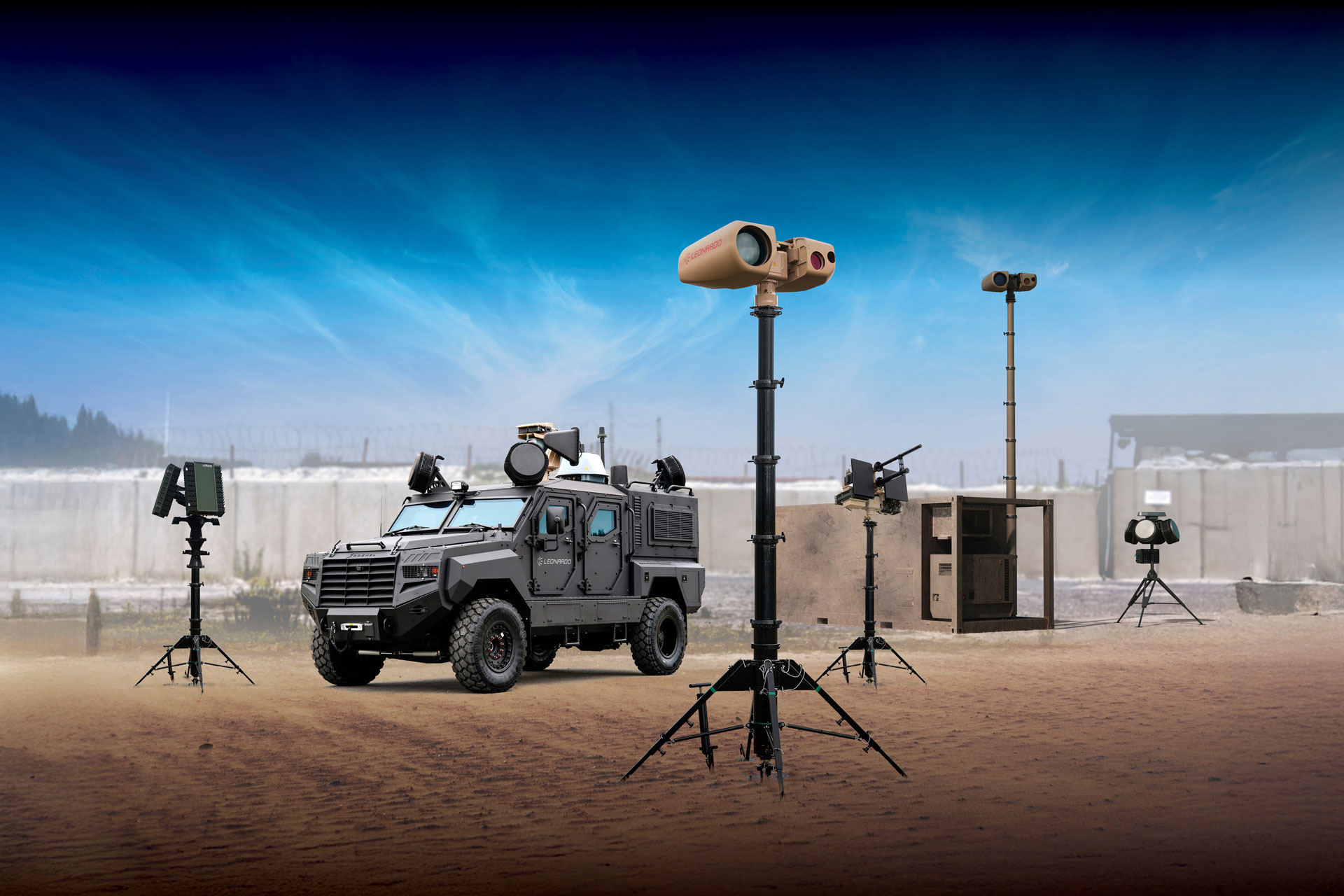
This is precisely the approach Leonardo takes with solutions such as Falcon Shield counter-UAS (C-UAS). Its ecosystem allows third-party equipment to be integrated, as demonstrated in recent NATO integration trials utilising best-of-breed sensors and effectors integrated via the HYAS C2 system. The choice of sensors and effectors is entirely up to the body procuring it; they can use equipment already in their inventory, or buy sensors and effectors from the market.
Successfully deployed on operations both in the UK and overseas, Falcon Shield is protecting military forces, bases and critical infrastructure, ensuring public safety and providing area surveillance.
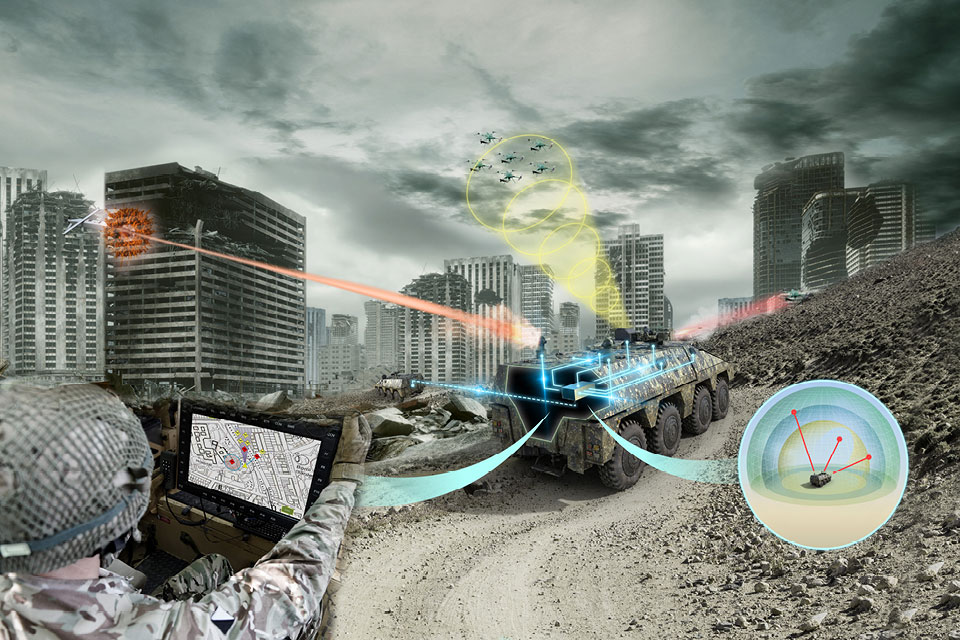
Another example is Leonardo’s Modular Integrated Protection System (MIPS), an integrated active protection system for vehicles. Ideal for the British Army’s 20:40:40 approach, MIPS is a UK-owned, open-architecture controller connecting sensors and countermeasures. It assesses the threat and recommends a response. We envisage that operator-authorised responses will allow everything through to fully autonomous engagement. By standardising the architecture and meeting the UK’s SAPIENT and ISA standards, MIPS offers a coherent approach that is fine-tuneable over time.

Yet another example of this adaptable protection approach is the Hostile Artillery LOcating (HALO) system, called ‘Serpens’ in British Army service. This weapon-locating capability that detects enemy artillery acoustically is particularly survivable because it does not emit an electronic signature, as other radar-based artillery detection systems do.
Falcon Shield, MIPS and HALO all have a core C2 software ‘brain’ allowing other technologies to be ‘plugged in’, information shared and software rapidly updated. This C2 functionality in Falcon Shield and HALO is called HYAS, and its open architecture allows plug-and-play of disparate elements, negating the need for bespoke systems.
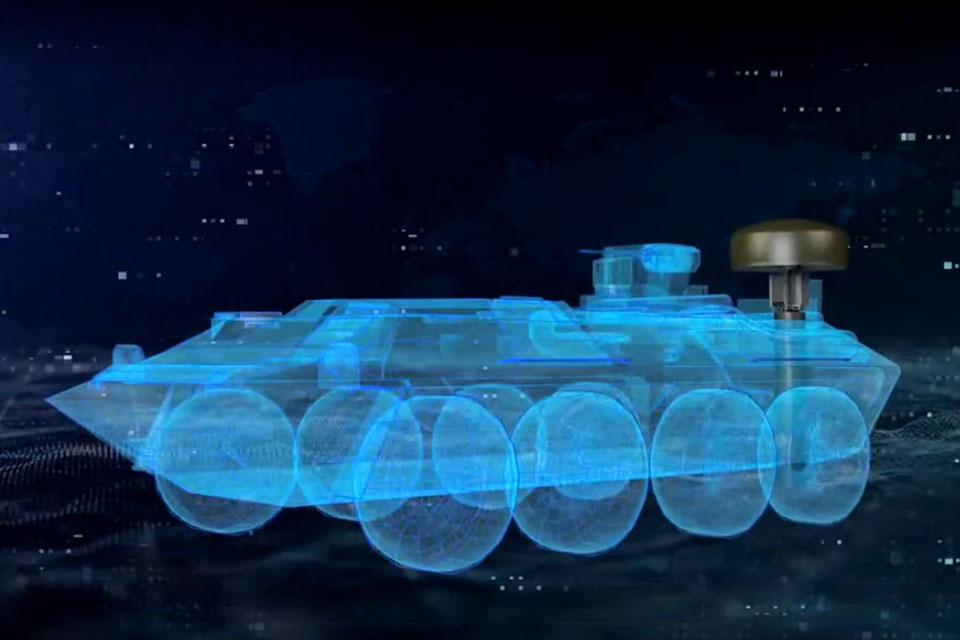 The same adaptability applies to IVECO’s Viking 6x6 uncrewed ground vehicle. It can mount the Guardian Vantage electronic warfare and signals intelligence package, or operators can quickly replace it with Falcon Shield or something else. Such an approach ensures coherence between capabilities and helps militaries avoid vendor lock-in and bespoke silos.
Proportionate response under a single framework
Depending on the conflict spectrum and rules of engagement, some threats require a kinetic solution and some do not. This raises the spectre of proportionate response, such as operator-informed or operator-authorised cueing, through to fully autonomous engagement – if and when compatible with a customer’s rules of engagement – when time is too short for human decision-making. For instance, soft-kill against a UAS is the most appropriate approach in an urban area in peacetime. Conversely, full combat operations may require hard-kill solutions that incorporate a kinetic system. The point is that protection must relate to threat types and environment.
This means militaries must have the flexibility and ability to tailor the correct protective layer and system in the right place at the right time, depending on the threat environment.
An effective protection system will also help operators manage the data flooding in. Modern forces have more information than they can currently process, so they need intelligent C2 systems to correlate it and prioritise threats, but with humans in the loop. Part of the solution is taking some of the cognitive burden off humans, and getting machines to do things faster and better than an adversary can. With such autonomy, a commander has more options to create appropriate and cost-effective solutions.
Conclusion
Rather than offering standalone systems, Leonardo provides the structures to tie together feeds with central decision support and autonomy. Indeed, the company is already supporting the British Army and allies with such cutting-edge technologies, playing a leading role in delivering mission-ready capability for frontline use. Furthermore, Leonardo is able to draw on its expertise in the autonomous space through adjacent products such the Praetorian Defensive Aids Sub-System (DASS) for the Eurofighter Typhoon.
This degree of adaptability requires skilled people so that systems can be rapidly developed and enhanced. Fortunately, Leonardo has significant UK-based engineering and technological expertise, and its open-architecture solutions create opportunities to integrate technologies from a range of UK companies in the supply chain. By integrating agile and novel technologies from UK SMEs, Leonardo harnesses its own capital benefit as a prime with the agility of SMEs.
Falcon Shield and HALO are examples of UK-developed capabilities that possess considerable export potential and success. Typifying Leonardo’s intrinsic sovereign capabilities, a camera lens used in Falcon Shield is incredibly thin – slimmer than the diameter of a hair – and the UK is one of only two European nations where these lenses can be manufactured.
What does the future hold, then? Layered protection is not about simply adding more standalone, defensive systems. Closed-loop proprietary systems designed for specific threats bring their own controllers and interfaces, locking militaries into single suppliers. This prevents best-of-breed approaches and makes it harder to rapidly adopt new technologies.
Far better is the creation of adaptable architectures that sense, decide and respond to emerging threats. Ultimately, this is the only way to enable the survivability and manoeuvrability of troops.